Laser Light Power Selection: How to Match Wattage to Throw Distance, Ambient Light and Venue Scale
- Share
- publisher
- Darktone
- Issue Time
- Oct 8,2026
Summary
Laser power depends on throw distance, ambient light and beam count - not venue size. This guide gives a practical venue x throw x ambient wattage table from 3 W club units to 300 W landmark installs, shows how to read it, covers haze, urban light pollution and beam-splitting pitfalls, and walks through a 40 W IP65 outdoor festival example. A rule-of-thumb estimator and the key non-wattage specs (divergence, scanner speed, safety class) are included.
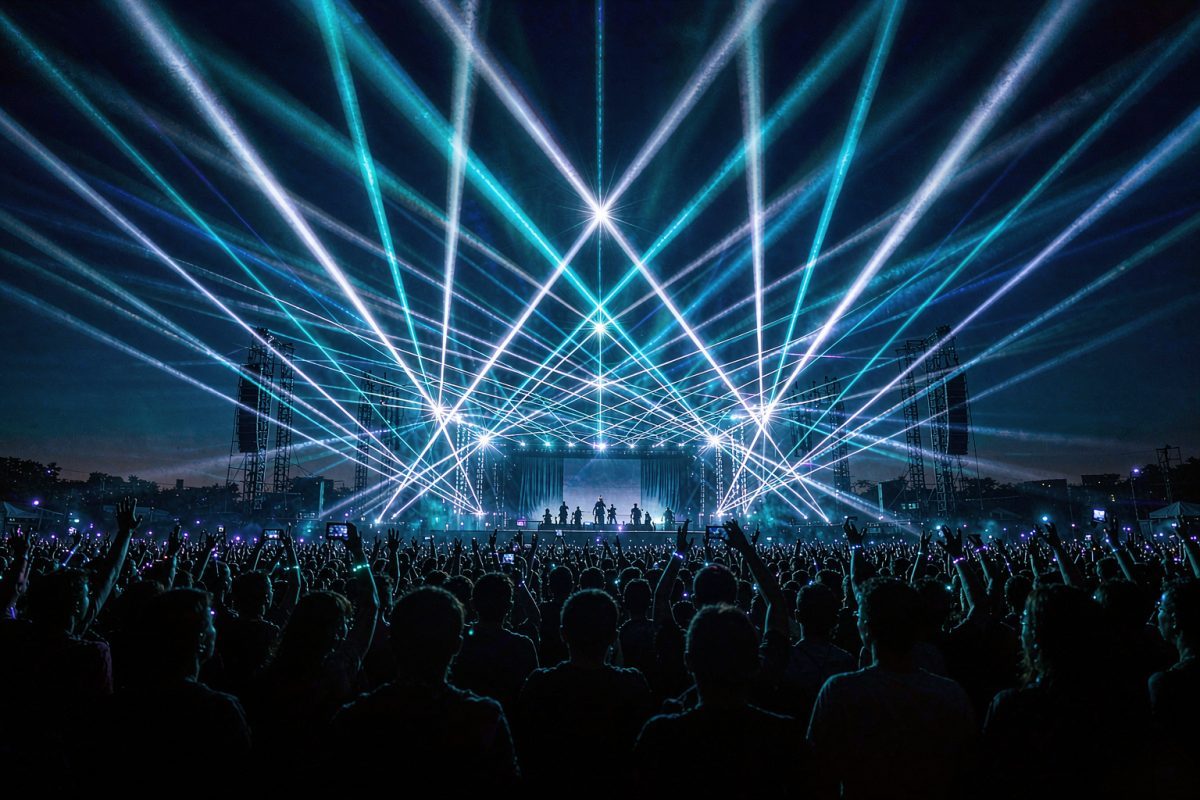
Laser power is measured in watts of optical output, and the right number depends on three things: throw distance, ambient light, and how many beams you are spreading that power across. A 10 W laser light can outperform a 30 W one at 40 metres if its beam divergence is tighter. Use the table below as a starting point, then confirm the final specification with the manufacturer before you buy or rent.
This guide is written for the people who actually sign off on the rig: event planners comparing quotes, and lighting engineers who need a defensible number rather than a guess.
The Three Variables That Decide Power (Not Venue Size)
The most common mistake in laser procurement is asking "how big is the venue?" Venue size is a proxy at best. What actually determines the wattage you need is a combination of three physical factors:
Throw Distance
Beam brightness falls off with distance, and with divergence the effective irradiance drops roughly with the square of the throw. A laser that looks punchy at 20 m can look anaemic at 60 m. Always spec the longest throw in your design, not the average.
Ambient Light
A 6 W unit in a blacked-out club can read brighter than a 20 W unit fighting stage wash, LED walls, or urban sky glow. Outdoor city environments are the most demanding case of all — you are competing with the entire skyline.
Beam Count
Total optical output is a fixed budget. Split one 20 W laser light into 40 beams and each beam carries only a fraction of the power. Graphics, liquid skies and dense aerial effects all dilute per-beam brightness.
Get these three numbers on paper before you look at any product page. They convert a vague brief ("we want something impressive") into an engineering requirement ("mid ambient, 40 m throw, 12-beam looks").
The Selection Table: Venue Scale × Throw × Ambient Light
The table below is the core of this guide — a field-tested starting point that maps common applications to typical throw distances, ambient conditions, suggested optical output, and the ingress-protection (IP) rating the fixture should carry.
| Application | Typical throw | Ambient light | Suggested output | IP rating |
|---|---|---|---|---|
| Small club / DJ booth | 10–50 m | Low | 3–6 W | IP54 |
| Theatre / mid venue | 50–100 m | Low to mid | 6–10 W | IP54 |
| Touring, indoor arena | 50–100 m | Mid | 10–20 W | IP54 / IP65 |
| Festival main stage | 100–200 m | High (with haze) | 20–60 W | IP65 |
| Architectural facade | 50–300 m | High | 40–120 W | IP65 |
| Landmark / city scale | 300 m+ | Very high | 120–300 W | IP65 |
Suggested ranges assume professional-grade laser lights with tight divergence. Always derate for weather, haze density and multi-beam content.
How to Read the Table
1 Output scales faster than distance
Going from a 20 m club throw to an 80 m festival throw — only 4× the distance — takes you from roughly 6 W to as much as 60 W. That near-quadratic relationship is divergence physics, not marketing. If budget only covers the bottom of a range, shorten the throw (move the laser light, add a relay position) rather than accepting a dimmer show.
2 Ambient light can shift you up an entire row
A mid-size theatre with a bright LED wall behind the stage behaves more like the "mid ambient" touring row than the "low to mid" theatre row. When in doubt, classify your ambient level one step higher — a surplus watt costs far less than an invisible show.
3 IP rating is non-negotiable outdoors
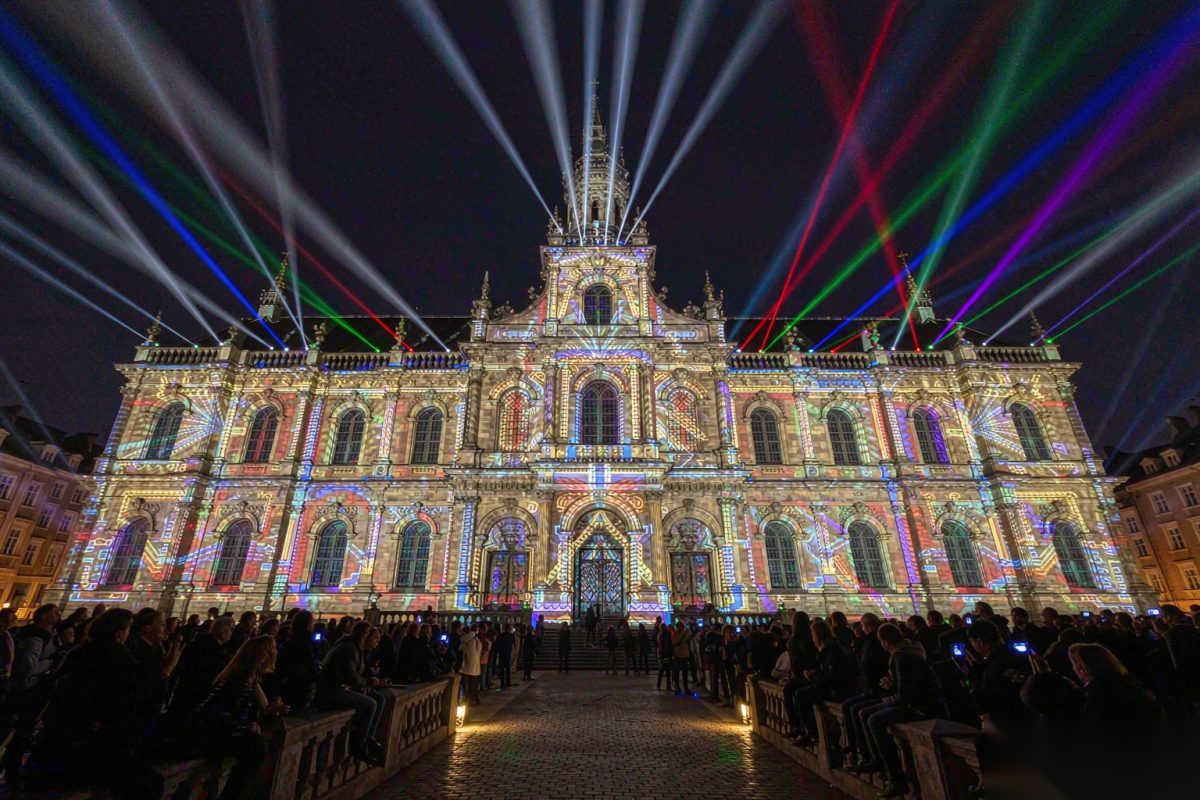
Anything exposed to weather — festival stages, facades, landmark installs — should be IP65. Rain and dust do not just threaten the fixture; a contaminated optical path scatters the beam and quietly robs you of the output you paid for. Indoor-only IP54 fixtures have no business on an outdoor roof position, whatever the wattage.
Three Commonly Ignored Premises
Haze and rain cut both ways
Haze is what makes beams visible at all — the festival row assumes it. But heavy rain, fog or snow scatters light before it reaches the audience and can halve effective brightness. For exposed outdoor shows, spec toward the top of the range.
Urban light pollution is ambient light
A rooftop or facade project in a city centre is never "dark." Sky glow can push you from the 40 W end of the facade row toward 120 W. Do a site visit at show time, at show brightness — not at 6 pm.
Splitting beams dilutes brightness
"20 W" on a datasheet is total optical output. A 32-beam aerial effect divides that budget 32 ways. Dense multi-beam looks or graphics-heavy content need headroom — or a faster scanner.
Putting It Together: A Worked Example
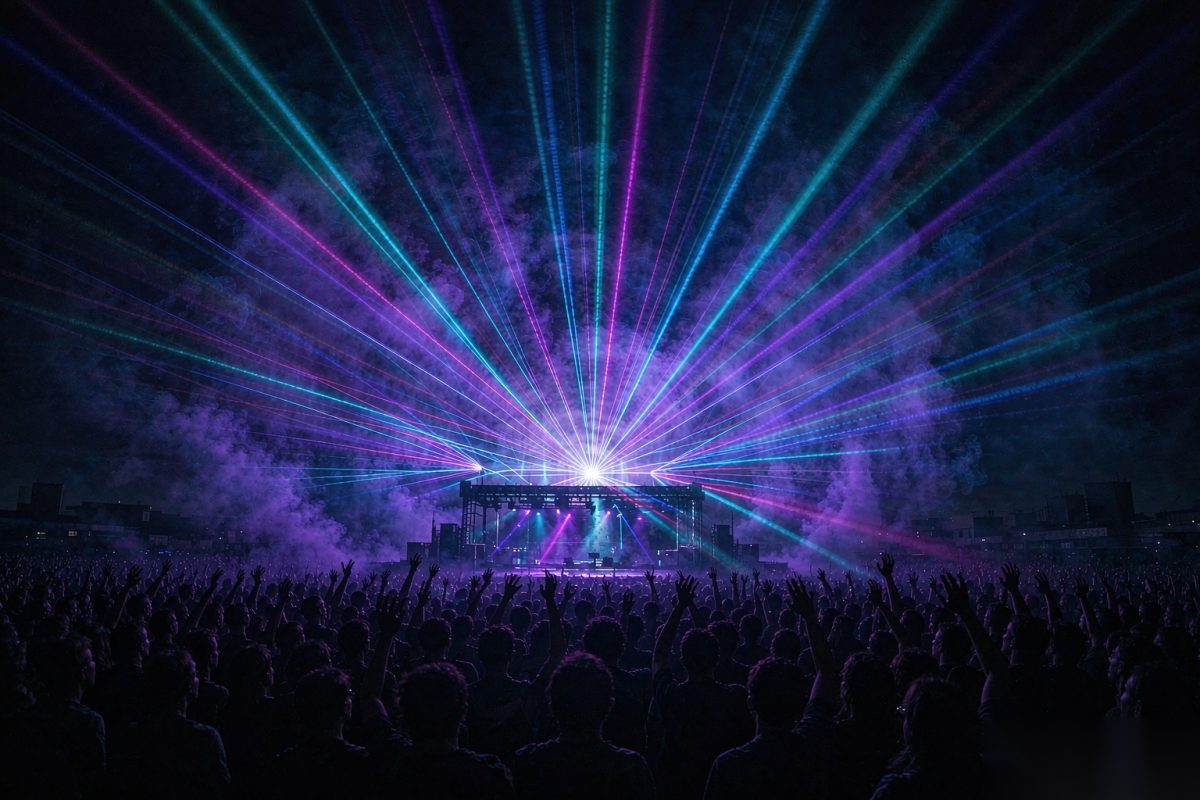
Say you are speccing an outdoor festival stage: 50–70 m throws from FOH towers, show running after dark but against stage wash and city glow, with haze on site and a mix of aerial beams and graphics. That sits squarely in the festival row — 20–60 W, IP65 — and the graphics content plus ambient competition argues for the upper half.
As a reference point, outdoor festival stages with 50–70 m throws are typically specified with 40 W IP65-class units — for example the Darktone 40 W waterproof RGB laser light, which uses a 30K scanner as standard and can be upgraded to 50K for graphics-heavy content. The sealed housing keeps the optical path clean in rain and dust, and the faster scanner option buys back the per-beam brightness that dense graphics content would otherwise dilute.
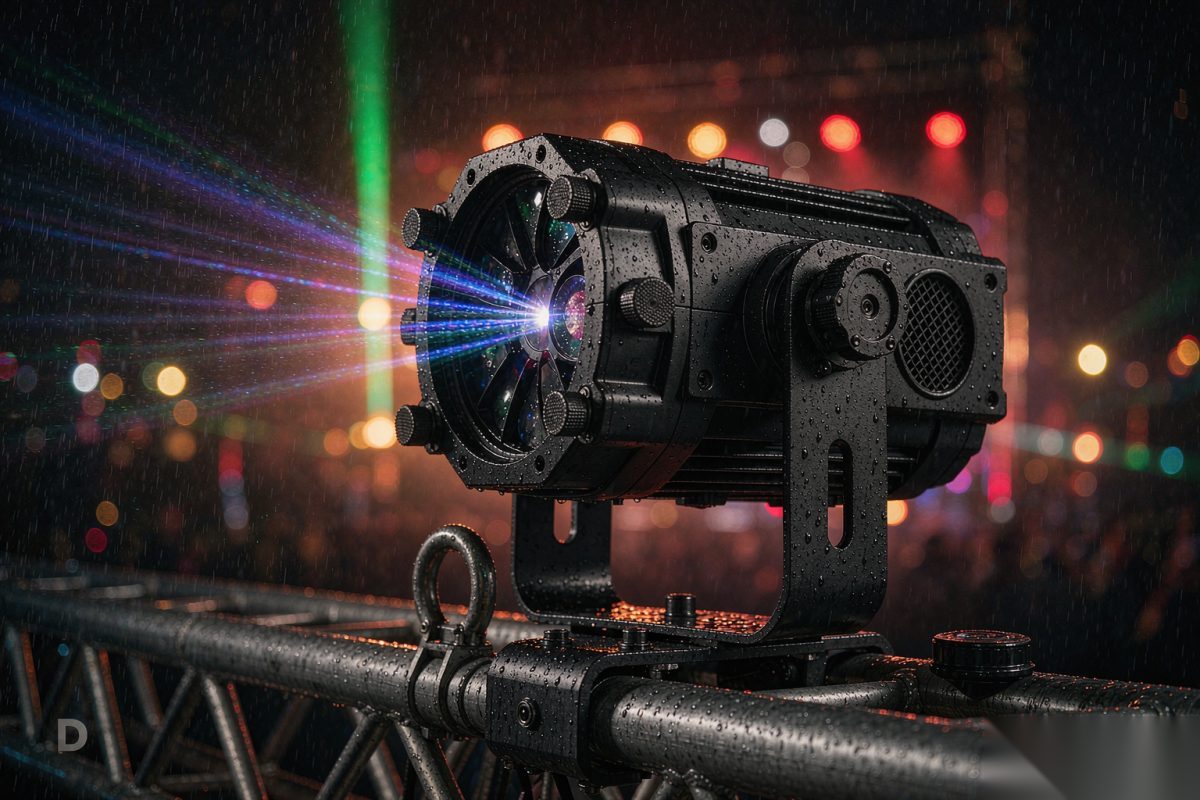
Note the selection logic in that example: the wattage came from the throw-plus-ambient calculation, the IP rating came from the environment, and the scanner speed came from the content type. Three different questions, three different specs.
Rule-of-Thumb Estimator
For a quick sanity check between quotes, compress the table into three steps:
Base power by throw: roughly 3 W per 10 m of throw for a single tight beam in the dark (10 m ≈ 3 W, 40 m ≈ 12 W, 80 m ≈ 25 W).
Ambient multiplier: ×1 for a blacked-out room, ×1.5–2 for typical stage wash, ×2.5–4 for outdoor urban environments.
Beam-count headroom: if the show runs heavy multi-beam or graphics content, add 30–50%.
Worked through: a 40 m indoor arena throw with mid ambient and moderate beam content gives 12 W × 1.75 × 1.3 ≈ 27 W. Treat the output as a range to discuss with the manufacturer, never as a sole sourcing criterion.
Why Wattage Isn't the Only Variable
Two laser lights rated identically in watts can deliver visibly different shows, because power is only one term in the brightness equation. Before finalising any spec, also compare:
- Beam divergence — tighter divergence concentrates the same watts into a smaller, brighter beam.
- Scanner speed (Kpps) — determines how smoothly graphics render. 30K is a working standard; 40K+ pays off in graphics-heavy shows.
- Colour balance and modulation — analogue modulation and well-balanced RGB modules produce brighter-looking mixed colours than cheap TTL units at the same nominal power.
- Safety classification — higher powers bring stricter regulatory duties (CDRH variance in the US, EN 60825 in Europe). Factor compliance cost into the power decision, especially above 5 W.
Practical Takeaways
- Specify throw distance, ambient level and content type before asking any supplier for a quote.
- Use the table as your starting range, then adjust upward for weather, urban light pollution and beam-dense content.
- Never compromise on IP65 for outdoor positions, regardless of power.
- Compare divergence and scanner speed alongside watts; a tighter, faster laser light often beats a more powerful one.
- Confirm final specifications — including safety class and regulatory requirements — with the manufacturer before purchase.
Bottom line: there is no universal "best" laser wattage — only the right power for a given throw, environment and show design. Measure those three honestly, and the table does the rest. Browse more selection advice in our laser light buying guide.